 Few people venture into the heart of the Kara-kum desert, but those who do are drawn by an eerie bright light that illuminates the night sky for miles around. From afar a glowing red light seems to float on the horizon, enticing onlookers ever closer to peer into what seems like Dante’s Inferno. Only when they arrive at the edge of the pit do they realize the bright lights are the dancing flames of a deep burning crater, known to locals as ‘The Doorway to Hell’.
 This vast sinkhole in Turkmenistan was created many years ago by a Soviet gas company drilling for potential resources in the area. Reports of the expedition vary; some say the pit was created as early as the 1950s, another says 1971.
 When drilling started, the rig suddenly disappeared into the ground. It had drilled into an underground cavern, the roof of which had collapsed, forming a 60 meter-wide, 20 meters deep. It was also rich in natural gas, which was now largely unusable and escaping into the atmosphere.
 Some bright spark then thought, to contain the noxious gas, that it would be a good idea to burn it off, and so ignited the crater. Since then, the gas riddled pit has been burning indefinitely, and shows little sign of letting up.
 There is now a lucrative tourism trade surrounding Turkmenistan’s Doorway to Hell, so good in fact that a small village has erupted near the pit. Darvaza is now home to about 350 inhabitants, who live a semi-nomadic lifestyle in the region and often set up their home near the burning sinkhole. With all that gas being released into the air, let’s just hope they’ve got strong stomachs and a poor sense of smell.
 A dog-owner risked his life by plunging into a frozen lake to save his pet.Walkers were stunned to see the man dive into the water, despite repeated warnings for him not to.He had been shouting at his black cocker spaniel 'Jarvis' to come back to the shore after it ran onto the ice chasing ducks.
 The dog became trapped in water which had not frozen over in the centre of the lake.After five minutes of frantic doggy paddling, the dog was struggling to keep his head above the surface and was not able to climb back on to the ice.His owner quickly removed some of his clothes, despite the sub-zero temperatures, and stepped off the bank, smashing the ice as he went neck-deep into water. Both emerged shivering from the cold but the owner simply shook himself dry and calmly walked away.
 University lecturer Julie Brown, 46, captured the drama at Alkrington Woods in Middleton, Greater Manchester on New Year's Day and described the man as being as 'cool as a cucumber'.'The dog was struggling and started going under. It was very traumatic and people were screaming. My daughter was petrified,' she said.'I don't know who he is but I'd like to congratulate him for being so brave.'
  Alkrington Angling Club's Lee Fairbrother said the rescuer was 'lucky to come out alive'.He said: 'The water may be shallow, but under that you have five-foot of silt which can pull you under like quicksand.'A fire service spokesman said: 'We advise people not to let their dog run on ice. They can end up in very dangerous circumstances.'
 Anyone who lives in a country prone to heavy snowfalls will understand the strange pull of the powdery white stuff, as if it comes with a magnetic force able to draw even the most unplayful into interacting with it. And it’s almost completely impossible to pass an untainted area of pristine snowfall without leaving a mark, whether it’s foot prints or snow angels. Others like to, er, stick their face in it…
 In a recent snow fall in Seattle, while everyone else was seeking warmth and protection from the elements, Aly Lenon and his friends were getting creative. The guys just pushed their faces into the fresh fallen powder on car bonnets and with a simple point and shoot camera captured these very cool 3D snow reliefs, replete with rucksack straps and catches.
 We spoke with Aly, who is still reeling from the reaction the images have received online:“Making these prints I think represents a process that is essential to street art that I am really inspired by. I stumbled upon them by accident, leaning up against a car in the snow and letting my face fall into the new powder. I took a picture with my point and shoot camera with flash and the images just popped off the snow. My friends and spent the next hour running from car to car making prints with our bodies. The process was very on the spot and improvisational, it energized my friends, was easy to do and very fun.”
 “Knowing the ephemeral nature of prints in snow make them feel very delicate and add a sense of impermanence to the photos. I have really enjoyed the internet blogosphere response to the postings and hope that everyone gets as much enjoyment out of them as they can.”
 Though there are always a few who want to rain on the parade, with the usual cries of ‘fake’ and ‘’shopped’, it won’t hold others back from trying out their own snow sculptures when the fresh snow falls again.
 We can feel a whole new reverse snow graffiti craze coming on.
A love-sick beaver has felled trees and left a trail of destruction in a desperate effort to find a mate.A massive search operation was launched today to track down the rodent, who escaped from his enclosure in a Devon farm by climbing over an electric fence. He is now over 20 miles away, across the county border in Cornwall.The beaver has gnawed his way through a swathe of trees on a one-and-a-half mile stretch of a river bank in a bid to build the perfect dam to attract a female. Locals had noticed fallen trees bearing the markings of beaver teeth - but experts were baffled as the animals have been extinct in England for the past 800 years.The six-stone male had escaped from its enclosure with two female beavers which were recaptured shortly after. The animal's conservationist owner, Derek Gow, is now laying a series of humane traps to try to recapture it.Mr Gow, who keeps 24 beavers under licence from Government agency Natural England, revealed that the 'docile and family-orientated' beaver is living on a 1.2mile stretch of the River Tamar.He said: 'I know where it is - that's not the problem. The problem is he has established a mile-long territory.'Beavers haven't lived here since the 13th century and so beaver traps are in short supply. They don't exactly sell them at B&Q.'We've made our own traps out of steel and aluminium - wood is no good for a beaver trap for obvious reasons. He'd gnaw his way out.
 'The trap contains female scent which we think may work because he must be lonely and is searching for a partner.'He can't build a dam because the River Tamar is far too wide for one furry rodent. He's obviously dug a small hole in the riverbank to live in.'It is one of those things that happen. It's not something anyone wanted to happen, but it has happened.'Mr Gow's beavers live in a large reserve, which includes a pond, woodland and small river. He believes that the animals escaped after heavy rain caused the water to rise and an electric fence short-circuited.'We've checked the fence,' he said. 'We can't find any holes at all. We can't think of any other way they might have got out.'The first two, both females, didn't get far, and settled in a small oxbow lake. The male, apparently looking for love, had other ideas and has river-hopped his way down to Gunnislake.'
 Mr Gow is now working with Natural England to track down the beaver using 'honeytraps' - boxes marked with a female beaver's scent.He said: 'It will require five or six at least and we've got traps being made up at the moment. They have two doors at either end and a sensitive plate inside.'Hopefully using the scent from one of the female beavers, we'll be able to catch the male beaver fairly quickly.' The eight-year-old beaver was brought to the UK five years ago from Bavaria. He is a herbivore and stays within 50m of the water.Beavers were hunted to extinction in England and Wales during the 12th century and disappeared from the rest of the country 400 years later. They were hunted for their fur and throat glands, which were believed to have medicinal properties.Mr Gow said: 'They do chop trees down, but you've got to remember that this is a native animal to this country.'In the Middle Ages, it was an incredibly valuable animal to kill. If you could kill a beaver, it would be three years' wages.'That's why there are no beavers any more. It is a native animal and should be here. They are an absolute elemental part of wetland ecology.'The law is we have to catch him. Natural England are perfectly aware of what is happening and are aware we will deal with it as quickly as we can.'Several of Mr Gow's beavers are in quarantine for six months before release into the wild in Scotland, as part of a Scottish Executive-approved reintroduction programme.Earlier this year, 12 baby beavers were born at a reserve at the Lower Mill Estate near Cirencester, Gloucestershire - the first in Britain in 400 years.In July, a pair of beavers built what is believed to be the first dam in England for centuries at Escot House, near Ottery St Mary, Devon.The estate has been working to reintroduce the animals on the site for three years and they are kept in an enclosure to prevent them from escaping into the wild.Over recent years, 15 beavers have been reintroduced to England and Natural England is considering a plan to release 20 into the wild.
 Human nature’s versatility is evident in their ability to survive in some of the most hospitable and remote places on Earth. What’s more is that humans don’t just survive but often flourish in these settlements, so it’s no wonder that vast, sprawling cities and bustling trading villages can be found in the world’s highest peaks and valleys.We present seven of the highest cities on the planet, some of which have become capitals of their country, some long abandoned and left to the elements.1. The Bolivian city of Potosí is reportedly the highest city in the world, sitting at 4,090 m (13,420 ft) above sea level. The peak of Cerro de Potosí, or Cerro Rico – Rich Mountain, dominates the city’s skyline, and towers a further 800 m above the rooftops.
 2. Sitting at 2,850 m above sea level and around 22 km from the equator is the Ecuadorian city of Quito. It is flanked either side by the Andes, and on a clear day it’s possible to see the snowcapped volcano, Cotopaxi in the distance.
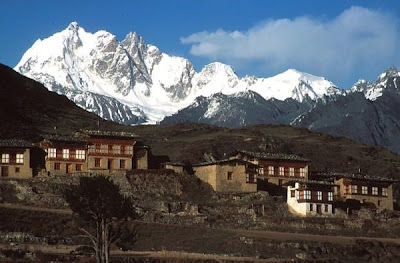
 3. Close to the Tibetan border, 12,630 ft high above sea level is the small secluded town of Laya. It is one of the most remote towns in Bhutan, so remote that routes to the area are often closed or impassable over the winter months.
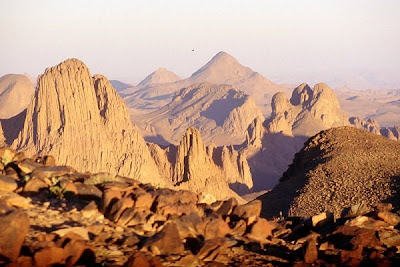
 4. It’s hard to believe the area around the towering peaks of the Atakor Mountains are populated; the area is so dry and desolate. But even here life goes on, in a city located around 2,728 m above sea level, called Assekrem. The city lies on one of the oldest trade routes through the Sahara.
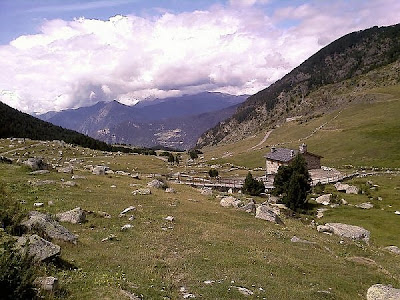
 5. La Paz, also in Bolivia, is a sprawling city 3,500 m above sea level and home to just under one million people. It’s in a great position for those who want to spend some time visiting a number of sights at altitude – the old ruins of Tiahuanacu are nearby (much older than Machu Picchu), as is Lake Titicaca.6. The tiny Principality of Andorra is a small landlocked country nestled in the Pyrenees mountain range, between Spain and France. The whole country is no bigger than 470 sq km (181 sq m) and the highest of the peaks – Coma Pedrosa – is 2,946 m (9,665 ft) above sea level. It’s also one of Europe’s most popular ski destinations.
 7. No list about cities in the clouds could be complete without the ancient city of Machu Picchu, high in the Andes. Thought to be built between 1460 and 1470 AD, the city sits at 2,430 m above sea-level and is often covered in cloud. The UNESCO World Heritage Site is popular with trekkers, some would say almost too popular.
He tends to thunder or rumble past rather than canter or trot.But then, nothing Duke the shire horse does is subtle. He stands at just over 6ft 7in high at the withers, or shoulders - a world record - and weighs more than a ton.Astonishingly, the five-year-old will continue to grow over the next couple of years, so he could yet put on another inch or two.  Duke - who in equestrian terms is a little over 19.3 hands - was rescued in 2006 when his former owner died suddenly.He has since become a star attraction at The Horse Refuge in Tenterden, Kent, where his new owners have had to build a special large stable for him. He also needs custom-made rugs and collars.
  Carer Sara Ross said: 'Visitors can't believe it when they see him. Some joke that he must be crossed with an elephant.'He towers over me. I go underneath him rather than around him when I'm with him to save time. When I'm grooming him I have to stand on something.' Duke eats more than £110 of food each week, receiving two large feeds and a bale-and-a-half of hay in a winter week - more than four times as much as a normal horse.Despite his formidable presence, Duke's best friend is Jasper - a Shetland pony.
These white fallow bucks make the perfect seasonal picture as they roam through the forest.Posed in an almost mirror image, the dazzling white fur of these young bucks cut a truly extraordinary sight next to the brown coats of their fellow deer.However they might not being Christmas cheer to their fellow fallows - these deers are known as Judas deers as their pale colouring stands out among the herd and makes them visible to poachers.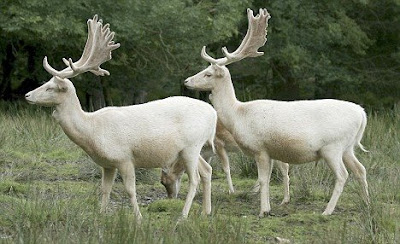 The magnificent creatures were snapped by amateur photographer and wildlife enthusiast Stan Kemish, president of the British Deer Society's Wessex division.Mr Kemish, from Hampshire, was delighted to find the two unusually coloured young bucks roaming together at the Bolderwood Deer Sanctuary in the New Forest.The retired 73-year-old said: 'I was really lucky to get this photograph - it was purely by chance that I came across them.'These two had been spooked by the sound of a dog barking in the distance and they had raised their heads in such a majestic way.'I think the picture really captures the beauty of these animals - they really look their best when they are alert."'Mr Kemish believes the bucks are two of a group of around 20 white fallow deer that roam the forest.He said: 'The white deer are such remarkable creatures and such beautiful animals.'It's so spectacular to see them and people love to come down to the forest to catch a glimpse of them because they are seen as such a big novelty.'It is thought the snowy-white complexions are not down to a lack of pigmentation but a gene found in some fallow deer.Mr Kernish said: 'It's a common misconception that the deer are albino.'If this were the case they would have pink eyes and pink feet but this isn't the case with these deer.'
 Few people venture into the heart of the Kara-kum desert, but those who do are drawn by an eerie bright light that illuminates the night sky for miles around. From afar a glowing red light seems to float on the horizon, enticing onlookers ever closer to peer into what seems like Dante’s Inferno. Only when they arrive at the edge of the pit do they realize the bright lights are the dancing flames of a deep burning crater, known to locals as ‘The Doorway to Hell’.
 This vast sinkhole in Turkmenistan was created many years ago by a Soviet gas company drilling for potential resources in the area. Reports of the expedition vary; some say the pit was created as early as the 1950s, another says 1971.
 When drilling started, the rig suddenly disappeared into the ground. It had drilled into an underground cavern, the roof of which had collapsed, forming a 60 meter-wide, 20 meters deep. It was also rich in natural gas, which was now largely unusable and escaping into the atmosphere.
 Some bright spark then thought, to contain the noxious gas, that it would be a good idea to burn it off, and so ignited the crater. Since then, the gas riddled pit has been burning indefinitely, and shows little sign of letting up.
 There is now a lucrative tourism trade surrounding Turkmenistan’s Doorway to Hell, so good in fact that a small village has erupted near the pit. Darvaza is now home to about 350 inhabitants, who live a semi-nomadic lifestyle in the region and often set up their home near the burning sinkhole. With all that gas being released into the air, let’s just hope they’ve got strong stomachs and a poor sense of smell.


